
SEBI’s IEX Insider Trading Investigation

Expanding the Frontiers of UPSI and Market Surveillance

Author: Atul Agarwal*

This note offers a regulatory perspective on SEBI’s interim order dated October 15, 2025, in the IEX insider trading matter. It focuses on how the case illustrates misuse of unpublished price-sensitive information (UPSI), the widening contours of insider trading liability, and SEBI’s evolving approach to preserving market integrity through surveillance and enforcement.

SEBI’s October 15, 2025, interim order against eight individuals in the IEX insider trading case is a significant development in market regulation, highlighting the use of unpublished price-sensitive information (UPSI) and expanding the scope of insider trading liability.

The case involves individuals allegedly making over ₹173 crore by using inside information from the Central Electricity Regulatory Commission (CERC) about market coupling, which was expected to negatively impact IEX shares.

Editorials discuss the order’s implications for market integrity, the potential for both intentional and accidental insider trading, and SEBI’s increasingly aggressive enforcement, notes Business Standard.

Key Aspects of the SEBI Order and Editorials

Modus Operandi: The eight individuals allegedly placed bearish bets (put options) on IEX shares just before the CERC announced its market coupling order, which caused IEX shares to drop by nearly 30%.

Illicit Profits: The trades resulted in illegal gains of over ₹173 crore, which SEBI has ordered to be impounded.

Source of Information: The inside information reportedly came from two CERC employees who allegedly shared confidential documents and meeting minutes with individuals who then traded on them, say The Indian Express and The Hindu.

SEBI’s Action

SEBI barred eight individuals from the securities market until further notice. Ordered the impounding of over ₹173 crore in illicit gains and barred them from trading until the amount is secured.
The entity has seized confidential documents and communications from the individuals’ devices during a search and seizure operation.

Wider Implications For Insider Trading
The order has expanded the potential scope of insider trading liability by covering individuals who may have both intentional and unintentional involvement, such as those sharing a household with an insider, according to LegalBrief.

It signals SEBI’s intensified enforcement in the derivatives market and its focus on using information from one regulator to prosecute trading in another, notes Business Standard.

Summing Up

This matter stands out as one of SEBI’s largest and most significant crackdowns against insiders and is likely to serve as a benchmark for future actions on the misuse of UPSI and derivative market abuse.

*The Author is Atul Agarwal, General Manager, Integrated Surveillance Department, SEBI Mumbai.
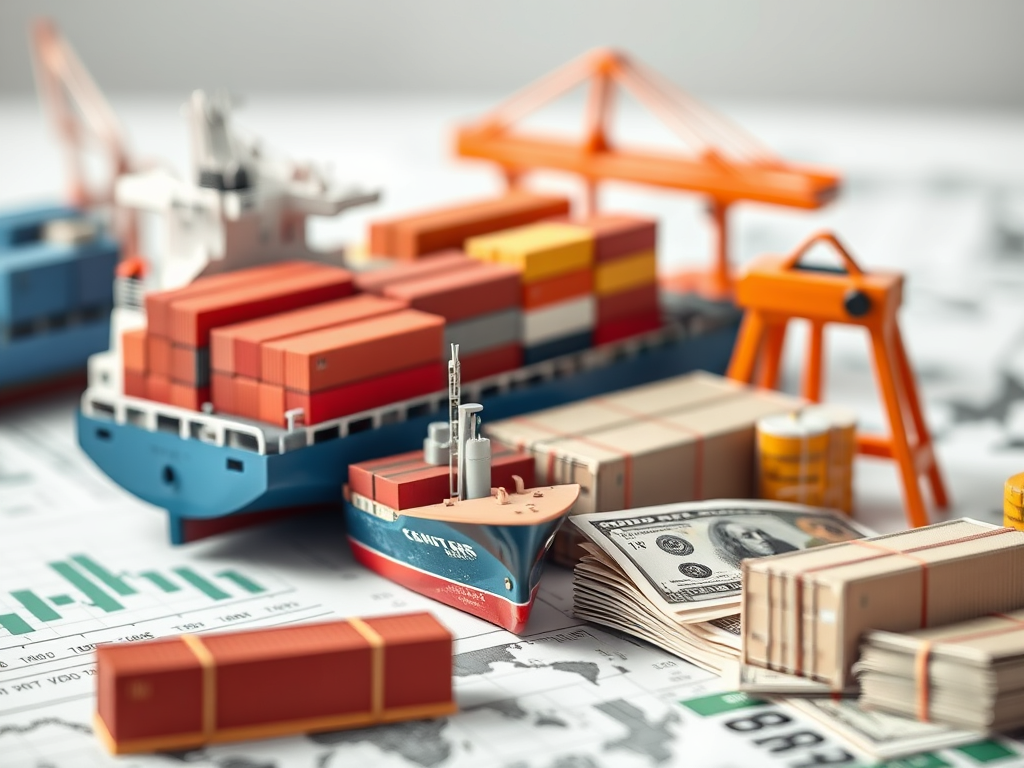
Unsustainable US Tariff Threats: India Must Hold Firm

By Anu Singh

Increasing import tariffs to 50% against Indian goods to be sold in the USA is not an economic move to reduce the trade deficit of the United States, but a strategic move to pressure India to
divert its economic and political relationship from Russia. Washington is playing a game of chicken, also known as the prisoner’s dilemma, between India and Russia. India and Russia are two players, and the US is the
cop to break the ties between the two. India has two strategies: maintaining its alliance with Russia or getting reduced import tariffs from the US for its exports. If India opts to maintain its
partnership with Russia, it can continue to secure beneficial deals in sectors like oil and defence; however, this may put it at odds with U.S. interests. Agreeing to U.S trade deals could yield short-term economic benefits but risk forfeiting strategic advantages. Whether to fall under the prisoners’ dilemma and achieve a less efficient position completely depends on India and its trust
in Russia in continuing to offer better trade deals for oil or defence goods to India. The U.S. acts as a cop in this game, trying to influence the prisoners to defect against each other by
manipulating tariffs. Since Russia has no direct actions to take in this matter, it should maintain its alliance with India, even when India is no longer partnering with the US in the future. The solution to the prisoners’ dilemma is for the prisoners to stay cooperative. India should stay
strong and should not defect from its relationship with Russia to choose the trade deals expected by Washington, which is a less reliable partner compared to Russia. It is important for Delhi to
carefully choose the strategy that has long-term benefits to India compared to short-term benefits.
Donald Trump’s hike of import tariffs against India is not an advantageous move for India, for sure, but it is not even good for his own country. Increasing tariffs on a country that produces goods more cost-effectively than your own domestic producers not only leads to inefficient allocation of your country’s resources but also negatively impacts consumer satisfaction in America.
The economic goals of increasing tariffs against a country that can produce some goods in a cost-effective manner than the domestic economy can be three: one, to reduce trade deficits; second, to create a free trade area (FTA) with other economic partners under some trade deals; and third, to protect its infant industry. One of the other political reasons to increase tariffs is to protect the national security of the nation. The US should not have any infant industry issue where the tariff has been raised to protect its
infant industries against a developing economy like India. The Wall Street Journal has already reported a slight increase in tariff revenue for the US, despite a significant increase in tariff rates. It is rather affecting the corporate entities of the US. Therefore, increasing tariff revenue may not be working for Washington. Countries generally go for reciprocal import tariffs, which can fail
Trump’s attempt to reduce trade deficits. Therefore, tariff hikes are not a good move for Americans, as they also bring disadvantages to America.
India Must Stay Strong!
India must stay strong, as America cannot sustain tariff hikes for long, for the following reasons. When imported goods become more expensive for Americans, the US, being a market economy, where price signals economic activity, domestic producers may raise their prices too, knowing
that now there is less competition from competitive Indian industries. The result would be that US consumers would pay more for a smaller variety of goods available to them.
With US producers facing tariffs on their exports to India, it will also hurt them. US local producers will face higher input costs amid increased import tariffs, which will not only raise the price of local goods but also reduce their export competitiveness in global markets. When industries are protected from foreign competition, which reduces the incentive for domestic producers to innovate or improve productivity, it leads to a slower innovation rate in the country that has imposed high import tariffs against the competitive nations.
Furthermore, it may yield a slight revenue gain for the government, but in the long run, it disrupts the country’s economic and political advantages by positioning it as a foe to the rest of the world. The policymakers in Washington are well aware of the risks they may face; this battle will not last long; therefore, the ideal situation for India is to remain strong and not cheat Russia.

  • Anu Singh has a PhD in Economics and is currently working as an Associate Professor of Economics at Christ University, Bangalore

Understanding Economic Dimensions

This is the post excerpt.

This is my first blog to start with, my plan of this blog is to share the economic dimensions of the news we read and watch every day. Being the economist and the student of economics since 1990 I rarely find any difficulties in reading and understanding the news related with the economy. At the same time I never realized that a common educated man might not be aware of or knowledgeable enough to take away the true wisdom after reading the economic bulletin.

Therefore this blog is for the educated society which may sometimes misinterpret the facts of the economic news and takes it to some other dimension than the real meaning, implications and impact of the facts identified and present in the news.

My share and write-up would be completely from the point of view of academics: theory and practice, without being biased towards any party or nation. I wish and hope to give the reader the basic understanding of the economic terminology, concepts, phenomenon related with the current economic affairs in very easy and simple way.

Why I think it is important?

Media now days, is not unbiased and unsold, it shows only what it wants to show the public. Human mind on the other hand is having limited cognitive abilities, therefore it doesn’t carry full rationality as we economist initially used to assume, and so unable to take the right information from the news. This double-edged sword is killing the decision making power of the educated lot.

Rationality in the above context mean an individual is fully aware of the problems and the solutions to the problems present in front of her. She can easily find out the best solution for the problem without having any difficulties in approaching the solution.

As we all know that ‘little knowledge is dangerous’, the same is applicable to the information gap, the misinterpreted information and of course the wrong information. Such information unevenness can be the source of mal-adjustments in the economy and surely dangerous for the society. Most of the nations in this world are democratic where, the fate & the future of the economy is decided by the people, for the people and of the people.

Therefore, it is important for all of us to know the facts and its ‘pros and cons’ exactly the way they are and not what the media, the political parties and the government want us to perceive. It is also required from the social scientist to project the unbiased situation in front of the people. Let the people judge it correctly and decide what they want to choose for their personal and societal welfare.

For e.g. many times there is a news or report about the inflation rate going on in the economy and generally it is taken as negative phenomenon by the layperson, innocent or ignorant reader. What if I tell you that some percentage of inflation is good and required in the economy for its growth? Whenever there is a sudden price hike in the market for short period of time, for reasons like shortage of the supply etc. media start blaming the government for not controlling the inflation rate. What if I tell you that such an unexpected increase in price for a short period of time is not called or considered as inflation?

Many such things would be discussed in my blog in my successive writings, all the comments, queries and suggestions by the readers will be most welcomed.

I am Professor of Economics in one of the reputed institutes in Bangalore. This blog will be my effort to inform the less informed and innocent readers about the economic dimensions of the policies specifically economic affairs happening across the nation and the world.

By: Dr. Anu Singh

Economist